How To Eliminate Lubrication-Related Downtime In Poultry Evisceration Lines

How Optimized Lubrication Extends Equipment Life And Reduces Unplanned Downtime In Harsh Mining Environments
January 7, 2026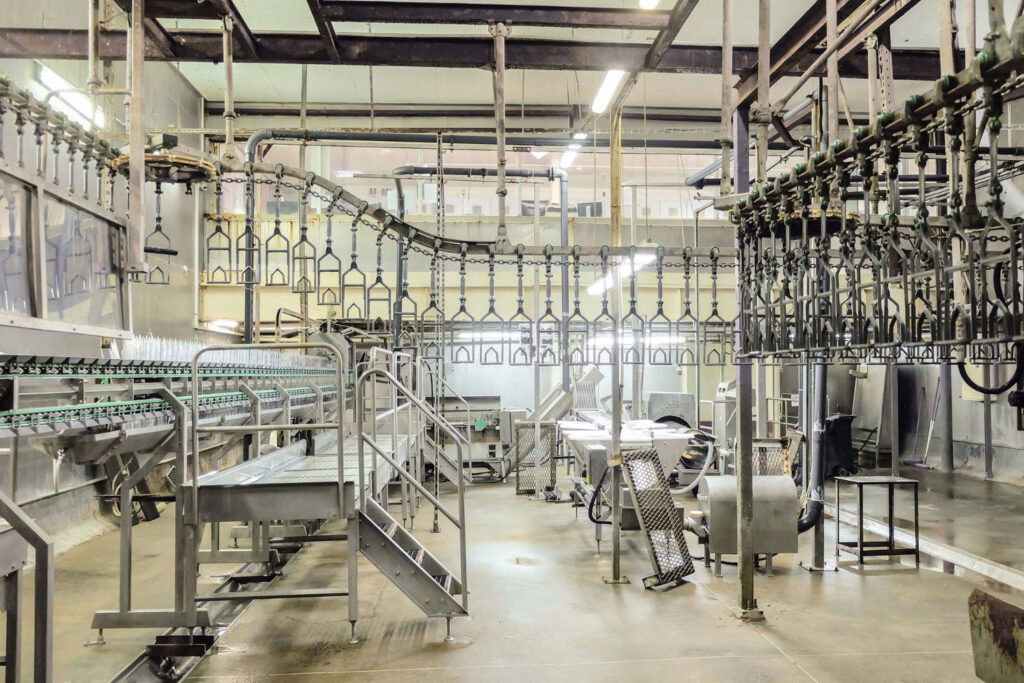
In commercial poultry plants, the evisceration line is one of the most critical and vulnerable process areas. It’s where high-speed, high-volume production meets extreme sanitation pressure. For maintenance and operations leaders, evisceration is often the single biggest source of unplanned downtime.
While there are many causes of stoppages, one root cause continues to drive failures across the industry: lubrication breakdown. This article explores the five most common lubrication-related issues in poultry evisceration and how plants can eliminate them permanently.
1. High-Pressure Washdowns Strip Lubricant From Bearings
A primary cause of premature equipment failure in poultry processing is the aggressive nature of high-pressure washdowns, which often employ 145° F to 160° F hot water, powerful alkaline or chlorinated caustic cleaners, and intense high-pressure sprays. These conditions are extremely effective at sanitizing, but they also act abrasively. They flush out standard H1 greases and oils from critical points like bearings and chains, which leaves them unprotected. Once the protective film is stripped away, metal-on-metal contact begins. This makes mechanical failure only a matter of time.
Solution: Use a synthetic, water-resistant H1 grease designed for extreme washdown resistance. Look for:
- High-tack polymers
- Exceptional water spray-off performance
- Resistance to alkaline/caustic attack
- Stable viscosity in cold environments
Bel-Ray® No-Tox® Food Grade Synthetic Extreme Pressure Grease with enhanced washout resistance can extend bearing life three to five times, even in daily sanitation cycles.
2. Water Ingress And Premature Bearing Failure
In the evisceration environment, bearing housings are continually exposed to constant moisture. This makes them highly susceptible to water ingress. Once water breaches the seal and enters the housing, it initiates a destructive cycle. It causes rust on the metal surfaces, dramatically increases friction within the bearing components, and leads to grease dilution. That washes away the protective lubricant film. This combination of effects rapidly accelerates wear, resulting in premature bearing failure and subsequent downtime.
Solution: A calcium sulfonate complex or advanced synthetic aluminum complex thickener system offers natural water resistance, strong mechanical stability, and long-lasting film strength. Switching to Bel-Ray® No-Tox® H1 greases can cut water-related failures by 35% to 60%.
3. Conveyor Chain Stretch And Contamination
Conveyor chains face significant challenges that lead to chain stretch and contamination. These challenges include exposure to high temperatures used for sanitation processes, constant contact with water and steam, and the pervasive presence of blood and organ contamination. Furthermore, the mechanical system subjects the chains to harsh stop-start mechanical loads throughout the operating cycle.
This combination of environmental and mechanical stress directly results in chain stretch. As the chain stretches, several costly issues arise. Line misalignment occurs, compromising the efficiency and precision of the evisceration process. Increased tension is placed on the system, which can accelerate wear on other components. Ultimately, this leads to costly production slowdowns as maintenance and adjustments become necessary.
Solution: Adopt a penetrating, high-film strength synthetic chain lubricant (such as Bel-Ray® No-Tox® Food Grade Waterproof Chain Lubricant) that:
- Performs in wet, cold environments.
- Provides corrosion protection.
- Maintains viscosity across temperature swings.
- Minimizes fling-off during high-speed operation.
4. Food Safety And Quality Assurance (FSQA) Risk
A critical concern for every poultry processing plant is the intense scrutiny surrounding food safety, making lubricants a significant FSQA risk when they become contaminants. Improper application (such as lubricant drips or over-application) can have severe consequences. These incidents can directly lead to negative USDA audit findings, which often trigger immediate corrective actions and result in lost production time. Furthermore, a contamination event carries the serious potential for recall exposure, posing a major threat to consumer health and the brand’s reputation.
Solution: Use H1-compliant, NSF-registered lubricants with clean-running synthetic bases, low migration tendencies, and minimal droplet formation. The Bel-Ray No-Tox product portfolio includes NSF H1 and 3H registered lubricants. They are approved for incidental and direct food contact and formulated to meet the most rigorous food-safety and compliance standards.
5. The Problem Of Over-Lubrication
In an attempt to compensate for the lubricant stripped away during intense washdowns, maintenance teams often resort to applying more lubricant than is actually needed. Unfortunately, over-lubrication leads to several drawbacks. Primarily, it causes excess lube consumption that drives up operational costs. Furthermore, the excess lubricant increases the drip risk, which exacerbates FSQA contamination concerns. This ultimately results in messy, inefficient equipment that requires more frequent cleaning and attention.
Solution: Use greases with higher mechanical stability, longer life per application, and resistance to purge and washdown. Plants switching to Bel-Ray® No-Tox® synthetic lubricants often report 25% to 40% lower lubricant consumption.
The ROI: What Plants Experience After Upgrading Their Lubrication Strategy
When a poultry plant upgrades from generic H1 lubricants to advanced synthetics designed for washdown-heavy applications, they commonly report:
- 3 to 5 times longer bearing life
- 30% to 50% reduction in chain-related downtime
- 25% to 40% decrease in lubricant consumption
- Improved audit readiness
- More consistent throughput with fewer line stoppages
For a plant running 140 to 175 birds per minute, even a single hour of avoided downtime represents tens of thousands in recovered value.
Bel-Ray For Advanced Evisceration Lubrication
Poultry evisceration lines push equipment and lubrication to the limit. With advancements in synthetic food-grade technology, plants no longer need to accept frequent bearing failures, chain stretch, or sanitation-related lubrication loss as inevitable.
Bel-Ray specialized synthetic food-grade lubricants are engineered precisely to meet these harsh demands. Our solutions provide maximum resistance against hot, high-pressure washdowns and water ingress. They ensure that lubrication protection is maintained where standard greases and oils fail.
By adopting a tailored Bel-Ray lubrication strategy, your plant can deliver immediate, measurable improvements in uptime, dramatically extend asset life, and enhance overall food-safety compliance.
Discover how Bel-Ray can transform your evisceration line reliability today.
