The Strategic Economic Case For H1 Food-Grade Lubrication: Protecting The Bottom Line

Strategic Reliability In An Uncertain Global Market
May 18, 2026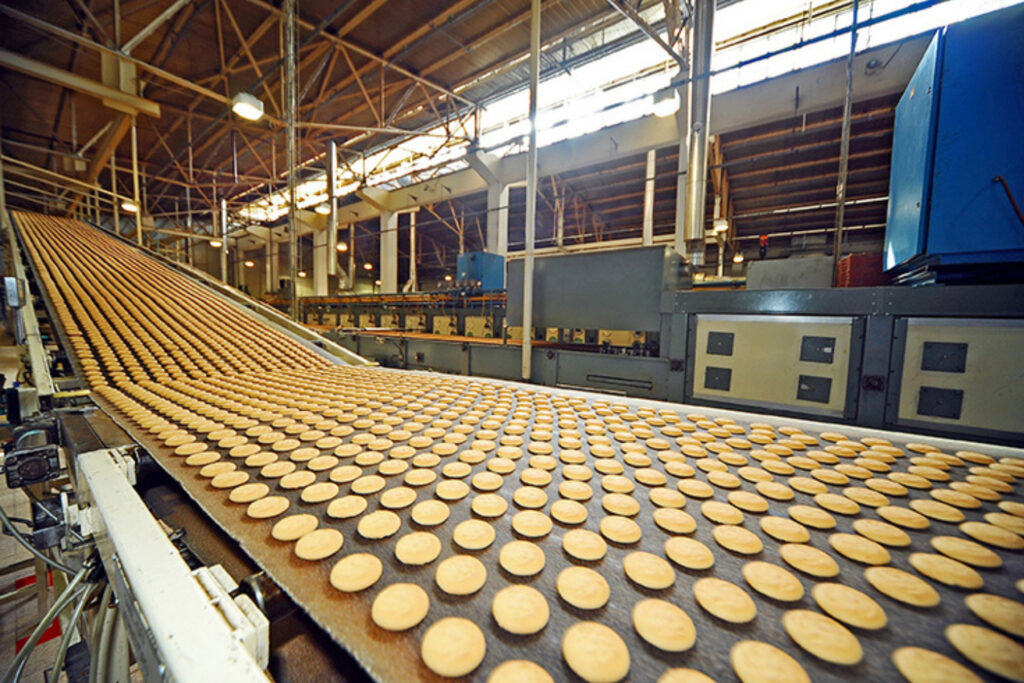
In the modern food and beverage manufacturing landscape, lubrication has evolved from a simple maintenance line item into a critical strategic safeguard. Choice of lubricant is no longer just a technical detail. It is now a primary driver of operational resilience and financial stability. Consequently for high-throughput facilities, transitioning to high-performance NSF H1 food-grade lubricants is a Total Cost of Ownership strategy designed to mitigate the staggering costs of product loss, recalls, and unplanned downtime.
The Massive Financial Impact Of Product Loss And Recalls
The financial consequences of a lubrication failure can be catastrophic. Today, significant food recalls often exceed $10 million USD in direct costs to manufacturers. (Source) However, this figure is just the start. It excludes the compounding costs of government fines, lost sales, and the cost of lawsuits. When factoring in the long-term erosion of brand reputation and future revenue, the total financial impact frequently escalates into the tens of millions or more. (Source)
A high-profile case that illustrates this immense scale is the 2022 Ferrero Kinder® chocolate global recall. Traced back to equipment at the Arlon factory in Belgium, the resulting Salmonella outbreak forced the recall of more than 3,000 tonnes of product. Analysts estimated the total loss at tens of millions of Euros: a stark reminder that a single point of failure on the production line can ripple through a global supply chain. (Source)
Operational Downtime And The Cost Of Failure
Beyond the risk of a public recall, poor lubrication management creates a persistent economic drain on daily operations. In the United States, equipment failure fueled by inferior lubrication costs manufacturers an estimated $240 billion annually in unplanned downtime and repairs. These costs are often driven by standard industrial lubricants that fail to protect against accelerated corrosion, ultimately triggering premature mechanical failure and shortening the lifespan of expensive assets. (Source)
High-performance NSF H1 synthetic lubricants provide a necessary defense against these vulnerabilities. Unlike standard alternatives, premium H1 lubricants (such as the Bel-Ray® No-Tox® product line) are specifically engineered to withstand aggressive washdown environments and extreme temperature fluctuations. By making the switch, facilities can significantly reduce the frequency of component replacements and extend the operational life of their most critical machinery.
The Cost Of Non-Compliance
As safety standards move toward a zero-tolerance stance on chemical contamination in 2026, the industry is shifting toward plant-wide use of food-grade options. However, food-grade lubricants remain in use for a few reasons.
- Separated Machinery: Standard industrial lubricants (often classified as H2) are still used on equipment located in areas where there is absolutely no possibility of contact with food, such as enclosed drive systems or machinery in separate rooms.
- Performance Gaps: Some specialized high-load or high-speed equipment, such as heavy-duty engine oils or complex transmission fluids, do not have equivalent high-performance food-grade alternatives.
- Cost And Legacy Systems: Research indicates that roughly 60% of U.S. food and beverage manufacturers have not fully switched to food-grade lubricants across all operations due to the higher cost of synthetic food-grade oils and misconceptions about their performance. (Source)
Although many food processing plants still use non-food grade lubricants for specific machinery, their use is strictly regulated to prevent any contact with products. Using non-food grade lubricants in areas with contact risk is illegal, and it carries significant penalties. The U.S. Food and Drug Administration (FDA) mandates a zero parts per million (0 ppm) limit for non-food grade lubricant contamination. Any contact requires the entire batch to be discarded. (Source)
The use of non-compliant lubricants puts plants at risk of audit failure, shutdowns, fines, product loss, recalls, and legal action. The cost of even a single shutdown can far exceed the premium for H1 lubricants. Moving to an effective H1 lubrication program ensures audit-readiness. This shifts procurement from a price-based model to a risk-mitigation model.
The Bel-Ray® Advantage
With 80 years of leadership in lubrication technology, Bel-Ray provides the expertise needed to optimize your lubrication program. From audit-readiness to a reduction in equipment failure, the investment in Bel-Ray® No-Tox® lubricants is more than recouped through increased operational efficiency and the elimination of catastrophic recall risks. In today’s unpredictable world, choosing Bel-Ray means securing the longevity of your assets and the safety of your customers.
Contact our team to learn more.
